QUAIL MUTTERINGS #22. A Memorable Wedding (July 22, 2013)


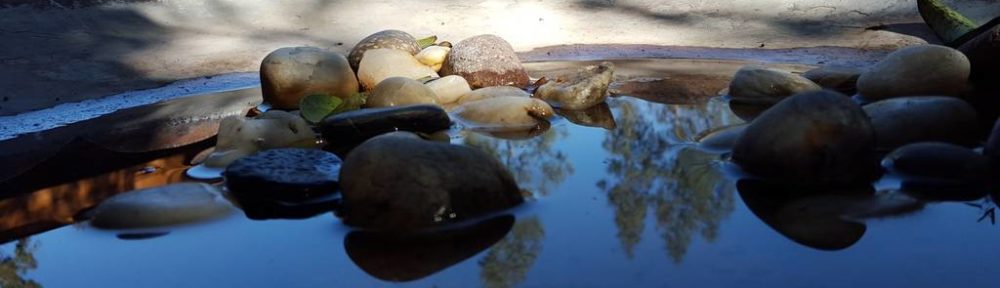
               I don’t think there’s such a thing as a standard wedding. I’m no expert, that’s for sure, but I think we managed to pull off a pretty good one for our daughter last month, even if I do say so myself. Over two-hundred people descended into our canyon to take part in this country wedding. A live bluegrass band played in front of a rustic fountain I’d put together featuring an antique hand water pump feeding into a converted cattle water trough. Guests had a choice between barbecue or vegan, and home-made horsd’oeuvres. Each ivory-draped table displayed vases of fresh-cut flowers, candles, napkin-wrapped utensils and champagne flutes. Some out-of-state folks, I heard, thought that our venue was part of a Hollywood set and couldn’t believe that people actually lived in the log cabin. The mix of attendees was incredibly diverse, perhaps due, in part, to the combinations of the families involved.

Jessie’s two dads walked her down the stone steps off the front porch and through the bark laid path leading under the canopy of oaks. When the question was asked, “Who gives this woman?” they replied a choral, “We do.” Chuckles rippled through the crowd. Tom is her biological father and Kent is the dad who helped raise her with me. She feels doubly blessed.

When guests arrived they entered something that had taken on a life of its own, regardless of what we had to do with it. Perhaps Denise and Henry, let’s say, follow the signs and balloons from the top of Mussey Grade down to the dirt road where they turn left.

“Follow that car in front of us, Dear,” says Denise. “They must know where they’re going.” She notices the ravens flying overhead.

Hand-painted directions and two strapping young men, the brother and a cousin of the bride, urge them forward through the open gate and up the narrow lane curving to the left. Henry notices various other signs: FOLLOW THE PARKING ATTENDANT’S DIRECTIONS, NO PARKING, BATHROOM, QUICK SAND, POISON OAK AREA… “This is interesting,” he says to Denise. He pulls forward and backs into his parking space, as instructed. She holds his elbow with her right hand while pressing the wedding gift under her left arm as they walk down the solar-light lined path toward their destination. It is now 2:30 PM.

Quite a few people are already milling about, waters in hand, under dappled sunlight speckling the scene. Denise sets her present on the gift table and Henry ushers her to a seat near the split-rail fence.

“They sure have done a lot here. This place is lovely,” she says. Wood chippings completely cover all the areas from the natural bowl where the ceremony will be held, to the driveway and creekbed containing the tables, as well as the dirt road leading in. She picks up the hand-fans off their chairs before sitting down and hands one to her husband. “Another nice touch. Oh yes, I heard that Jessie had spent a couple years teaching in China. I’ll bet this was her idea.”

A friend of the family officiates the service referencing a parchment book she hand-crafted, marked with a silk ribbon. This beautiful piece of artwork will also serve as her gift to the new couple, complete with their chosen verses and dialogue. She orchestrates the “Handfasting,” draping strands of different colored strings over their joined hands, explaining how each one signifies a specific strength in a marriage.

Denise nods her approval. The four-year-old “Ring Bear,” as the bride’s nephew calls himself, does a splendid job carrying the basket holding the rings and sitting up front with his granny. The flower girl is a tom-boy and sports black shorts, a white button-down shirt and suspenders. Her preferred title is “Expert Horticultural Attendant.” The bride’s two sisters join the bridal party along with two friends. The chosen color is a deep purple. Six groomsmen, including the man of the hour’s brother, flank the groom. They are all wearing suspenders over white shirts and black pants.

The year leading up to this event has felt like non-stop preparation for me. When Jessie first told us that she wanted to get married here in the canyon, for sentimental reasons, I was thrilled. I’ve always been open to this, but I really had no idea what was in store. An absolutely humungous guest list along with multiple expectations from the other families involved had me reeling.

First of all, in order to accommodate parking for over two-hundred people, massive amounts of brush clearing had to be done. This meant hand-clearing, with shovels and machetes, an area out-of-sight from the proceedings, to ensure a beautiful country wedding. In turn, the chippings from the piles of scrub oak and buckwheat became the ground cover for the entire venue. This was made more aromatic by bringing in additional loads of various tree shavings. Spreading all this by manual labor took weeks.

Jessie’s dad’s family and Sean’s folks came up from the city a few times for our potluck work parties. At first, the creekbed had seemed a bit rugged to Jessie’s step-mother. When we originally showed it to her she said, “You’re going to grade this, aren’t you?

“No. This is one of our most level areas. It is a country wedding, after all,” I’d responded.

“The Aunties” have hearts of gold. One of them has construction skills and installed a hand-rail along the rock steps. They made most of the signs that we posted everywhere. I’d made a list, complete with arrow directions, for them to work from. We hung Christmas lights in trees and on the porch, placed solar lights to designate the path to and from our parking area, wrapped potted geraniums with burlap and ribbons to accent the seating area, and “The Aunties” loaned us an elegant canopy for the beverage area. We picked up a very large livestock water trough from the feed store for iced drinks.

When our good samaritan neighbors received their invitation they offered their tractor to smooth out the road. I had a couple loads of asphalt grindings delivered and thanked them profusely. Their guest cottage became the honeymoon suite.

My friend volunteered to arrange all the flowers. For months, we saved interesting jars and soaked labels off. She borrowed my truck, since I had a shell on the back, and picked up the multitude of lovely blooms on Thursday down in San Diego. My sister and another friend helped trim, wrap bouquets and arrange on Friday. On Saturday, the day of the big event, she drove the truck, filled with over a hundred vases of beautiful flowers, very slowly in the dirt road. So gradual was her progress that one of the groomsmen jumped out of the car behind her and ran past, laughing all the way up the road. I heard this story later from both of them, independently.

Five-hundred pounds of ice was brought in that morning. I’d hired two parking attendants, four servers who happened to be my advanced dance students, and my assistant to help manage the day. Sean’s parents generously covered a lot of the escalating expenses, and Jessie’s dad and step-mother helped with all sorts of things including making the horsd’oeuvres the night before. I suggested that an outline should be made detailing the order of events… for the helpers, similar to what I do for our story ballets. However, I’m rather clueless about wedding etiquette and such and recommended that someone else might want to take this on. It was Sean’s mom that stepped up to the task gracefully.

From 8:00 AM that morning the place took on a life of its own. Every square inch of the house was occupied. The bridal party was up in the loft getting their hair and make-up done and then the photos. Jessie used the bedroom upstairs for her changing area… The groomsmen took over our bedroom downstairs. I finally had to kick them out to get dressed myself. The step-brother who brought the vegan/gluten-free food spread out in the kitchen while the flower crew set-up shop on the dining room table. The log-railed staircase and living room overflowed when the photographers set up. All these independent microcosms were functioning on their own, but also as part of the larger macrosystem.

As my son escorted me down the aisle I felt as if we’d entered a completely different world. It was like a magical atmosphere had descended and transformed our yard. I’d never felt anything quite like this before. It was clearly a different zone.

Quite a few people asked if I had considered opening our place as a wedding venue. I don’t know. Perhaps the canyon is asking to be shared?

Chi Varnado is the author of two books. Her memoir, A CANYON TRILOGY: Life Before, During and After the Cedar Fire, and her children’s book, The Tale of Broken Tail, are both available from www.amazon.com. Chi directs The Ramona Dance Centre: www.ramonadancecentre.com. Her collection of essays, Quail Mutterings, can be found on www.chivarnado.com.

QUAIL MUTTERINGS #21. The Basketball Hoop (April 8, 2013)

QUAIL MUTTERINGS #21.  The Basketball Hoop (April 8, 2013)


One of my meanderings up the canyon finds me halted, standing on a bare spot of brown next to the ancient oak which held my childhood’s basketball hoop. That particular tree, however, isn’t there anymore, but the one right next to it still is. But for this moment everything is how it was – leaving me standing in my past.

The worn geometric patterns on the faded orange ball allow my left hand to grasp, dribble and maintain control of its direction on this uneven ground. The regular, hollow thumping mesmerizes and pulls me deeper into my pre-teen body. The one that is constantly on the move. Aiming high I shoot up towards the dusty green leaves allowing my buoyant, rubber friend to descend directly down through the net with a “swoosh.” There’s no flat backboard to bank off of. If I want to make a bank shot my hands have learned, through practice, to use the less curved portion of the trunk above as a surrogate.

The warm, dry breeze, carrying the surrounding scents of sage brush and decomposing horse manure, sends my stray hairs dancing, tickling my forehead. I smooth them back behind my ears with the palm of my hand using the sweat as a natural hair spray. The rough bark of the oak pokes my back when I lean into it to remove a leaf from between my dirty toes. A cloud of dust reaches me and I turn to notice my cousin riding his bike over to the house, his tires slipping on the dirt as he peddles too fast for his treads to grip. He won’t interrupt me. He’s just out for a jaunt. I have plenty of time, the sun is only beginning its descent to the west.

A few short steps take me to the grey, metal bar that Dad installed for me to flip around and hang from – to use up some of my excess energy. My hands wrap around the familiar iron rod and I kick over the top. Pumping into a cast I shoot my right leg through, under my body, to straddle the bar. After four mil-circles I turn sideways and do a few windmills before putting my other leg over to hang from my knees. This feels good. A different perspective on things is interesting. The underside of the cupped oak leaves reveal exposed veins, part of the tree’s circulatory system. The mottled, hazy blue sky holds buttermilk clouds to the east while the sparkling light trickles through the foliage canopy to a spot on my tummy, since my ripped T-shirt hangs around my armpits. Even now, I’m reminded of a previous time when I was five or six, hanging on my knees eating potato chips. A red ant had crawled into the salty bag lying on the ground and was on a chip that I put into my mouth. “Ouch” did that hurt!

Every so often I get whiffs of the existence of tree ants so it’s no surprise when I see highways of them marching up and down the massive tree trunk. Another reminder of the long, luxurious days of summer, my favorite time of year. When there’s no school and time and freedom stretch out around me. The creosoted, split-rail wooden chute (a narrow, four-posted mini corral which Mom built for treating sick horses) hangs from the ground nearby. Or is it standing on the sky? From my upside down vantage point it’s kind of hard to tell. It’s similar to the view I have while lying supine on my surfboard, in the pond down the road, when I tip my head backwards into the water. Either way, it’s a trippy sensation you can get without being in a drug-induced state. Humans of all cultures seek paranormal sensations. As children, didn’t we all enjoy turning around and around in circles long enough to get dizzy and fall down?

For now, my reverie has subsided and I head back to the house. The grass is growing in the middle of the road like those horse and buggy lanes of yesteryear and wildflowers are poking up everywhere. Spring is in the air and I can feel it. And that means that those long, luxurious dog-days of summer are on their way.


Chi Varnado is the author of two books. Her memoir, A CANYON TRILOGY: Life Before, During and After the Cedar Fire, and her children’s book, The Tale of Broken Tail, are both available from www.amazon.com. Chi directs the Ramona Dance Centre: www.ramonadancecentre.com. Her collection of essays, Quail Mutterings, can be found on www.chivarnado.com.

QUAIL MUTTERINGS #20. Owl Serenade (February 2013)

QUAIL MUTTERINGS #20.  Owl Serenade (February 2013)


Every night, lately, the owls have been making their voices heard in the canyon. Recently, when I got home after dark, I could hear two owls nearby, in the creekbed, communicating in the old familiar “Whoo whoo” language. I also thought I heard a dog barking in the distance. But it wasn’t my dog. He’d met me at the gate. Then I realized it wasn’t a dog at all that I heard and it wasn’t all that far away. There was actually an owl up on the mountainside. It had a repetitive, staccato-sounding hoot. After a little research I figured it might have been a Spotted Owl, although there don’t seem to be many of those in this area.

I love hearing the symphony of the owls each night, floating in through my open window. Even if I’m having trouble sleeping the calming sounds of the natural world are soothing and make me wish that our world could always feel this peaceful. The week leading up to full moon, like this, always gives me pleasure when I look out over the creekbed or up at the shining boulders speckling the mountainsides. There’s a magical feel to it – lending a possibility to all good things, even if only right here and right now.

I wonder how owls have become affiliated with wisdom. Is it because they can swivel their heads up to 270 degrees independently from the rest of their bodies? Is it those big, inquisitive eyes which seem capable of pulling your thoughts straight out of you? Or is it simply their nature of staying up all night like those intellectual members of academia?

I remember my mom writing a little song when I was a kid. She was taking a piano class, as an elective, while attending San Diego State College (not “University” yet) pursuing her Geology degree. The lyrics were as follows:

The wise old owl

sat in an oak.

The more he heard

the less he spoke.

The more he heard

the less he spoke.


At the time it had sounded rather simple and repetitive to me, but I think I understand it more clearly now. As a teacher, I can see its significance. We, as parents and educators, may find ourselves continuously preaching at our children. Sometimes, it seems that the more we say the less they listen. If all they hear from us is constant noise then it can’t help but dull their senses. At some point, everyone needs to shut down from anything annoyingly repetitive to keep from going crazy. It’s a little like that torturing procedure where they strap you down and simply drip water onto your forehead at regular intervals.

John Holt, a well-known child advocate, teacher and author, said that once, as an adult, when he noticed his own defensive reaction in response to not grasping what was being taught [told] said, “…Please stop talking about it, and just let me look at it.” Then he thought to himself, “Remember what you have learned about learning. Be like a child. Use your eyes. Gag that teacher’s mouth inside your head, asking all those questions. Don’t try to analyze this thing, look at it, take it in.” He reminds us in HOW CHILDREN LEARN that “What is essential is to realize that children learn independently, not in bunches; that they learn out of interest and curiosity, not to please or appease the adults in power; and that they ought to be in control of their own learning, deciding for themselves what they want to learn and how they want to learn it.”

I’ve noticed, too, that kids pick up on things when they’re interested and care to learn about it. Hammering a youngster with letters and numbers when they don’t have any context to associate it with begins an exercise in frustration for both student and teacher alike. That’s one reason why it’s important to expose our youngsters to many different experiences so that when they are learning to read they can associate the words with some real thing they can identify with. Without tangible evidence in our memories, there’s not much hope of understanding or absorbing anything when the task of learning how to read is so new and challenging, in and of itself.

On the other end of this spectrum, when we’re older and have been reading for decades, simply flipping through a magazine has the potential to spark a new interest. Perhaps something we didn’t even know we cared about. That’s partly because we’ve had more exposure to life’s experiences and can associate it with many things.

Anyway, just last month we’d gone to Pennsylvania for my husband’s step-mother’s funeral. She was a wonderfully positive person who’d always been interested in others, letting them expound about themselves instead of going on about herself. Listening and helping others feel worthwhile came naturally to her. She constantly allowed herself to learn new things.

Kent and I stayed in the historic district of Philadelphia for those few days in January. We wandered Elfreth’s Alley, which was lined by well-preserved three to four story buildings with trap doors out front leading to basements below. I would guess that some, if not all, of those beautifully painted doors have been replaced over the centuries. They looked to be in strikingly good condition. These eighteenth century townhouses were actually inhabited by current renters. I found it intriguing that modern day people lived in, what seemed to me, a museum. The architecture of those old brick buildings struck my fancy. A few blocks away, in Carpenter’s Hall, where the First Continental Congress met in 1774, a small portion of a wall was opened up to display the aged lathing underneath. Horse-drawn carriages parked along the streets awaiting patrons wanting to sight-see. The Liberty Bell rests inside a building where no admission is charged. While Kent read every placard containing dates and other historical jargon, I stood in awe of the physical beauty of all that incredible hand-built history. Our interests as well as our preferred methods of learning differ. I was never much of a history buff – with all those important figures and dates. Perhaps it was subconscious, on my part, that I ended up marrying a historian. Who knows, we just might be able to pick up a few things from each other by osmosis.

A huge statue of Ben Franklin presides over the cemetery where he lays buried – a little like a wise old owl in a tree surveying his hunting grounds. This fellow was an extremely industrious U.S. statesman, writer and scientist – a true academic. His contributions include setting up a printing house in Philadelphia, inventing the lightening rod and helping frame the Declaration of Independence. His ‘Franklin’ stove used less wood than a fireplace and when he got tired of taking his glasses on and off he came up with an original pair of bifocals – framing the individual sections of glass. He also made a catheter for his sick brother and a simple odometer for his mail delivering carriage…. This guy really knew how to keep the love of learning alive.

After all the hassles of a missed flight and other modern security irritations we felt grateful to come home to our little nook in the canyon. Where, once again, the owls and other natural inhabitants fill the night with their reassuring voices. So, I say “Whoo whoo” to you. Open your window tonight and see if you, too, can hear their wonderful notes of wisdom.


Chi Varnado is the author of two books. Her memoir, A CANYON TRILOGY: Life Before, During and After the Cedar Fire, and her children’s book, The Tale of Broken Tail, are both available from www.amazon.com. Chi directs the Ramona Dance Centre: www.ramonadancecentre.com. Her collection of essays, Quail Mutterings, can be found on www.chivarnado.com